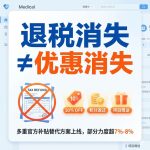
On December 31, 2025, South Korea officially ended its nearly decade-long policy of refunding value-added tax for medical beauty treatments received by foreign tourists. As news of the end of this policy spread, many began to believe that the cost-effectiveness of seeking medical beauty treatments in South Korea was over, and that Chinese consumers would begin to return to their home country for such treatments on a large scale.
However, if we consider the actual price structure, hospital costs, and changes in distribution channels, we discover a fact that has often been overlooked: the end of this tax-refund pol
icy does not mean that medical beauty treatments in South Korea are no longer cost-effective.
With the right platforms and channels, the overall cost-effectiveness of seeking medical beauty treatments in South Korea remains significantly higher than that in China.

First and foremost, the end of the tax-refund policy for medical beauty treatments in South Korea does not mean that its competitive advantage in terms of prices has disappeared.
Over the past decade, the 10% tax-refund policy has indeed been one of the key factors attracting overseas consumers to South Korea for medical beauty treatments. However, it has never been the sole reason for the competitive pricing in this industry.
South Korean medical beauty services have long been based on three core strengths:
First, there is a high degree of specialization and efficiency among doctors. Many dermatologists and anti-aging specialists focus exclusively on a few specific procedures, resulting in greater proficiency and higher consistency and stability in their work compared to those who handle multiple procedures simultaneously.
Second, the cost of purchasing equipment and consumables is lower due to bulk purchases at a corporate or regional level. Whether it’s energy-based devices or injectable materials, South Korean institutions typically purchase these in larger quantities, which significantly reduces the actual cost per treatment compared to individual Chinese clinics.
Third, various medical beauty procedures in South Korea are highly developed and standardized. Treatments such as hyaluronic acid injections, laser therapy, radiofrequency, and ultrasound procedures have well-established processes, resulting in lower failure rates, faster recovery times, and fewer hidden costs.
Therefore, even without the tax refund, the prices of many core medical beauty treatments in South Korea are still approximately 20% to 35% lower than those at similar facilities in China.
II. The End of Tax Refunds: What Really Ends Is the “Individual Traveler Era” for Medical Beauty Treatments in Korea
With the withdrawal of the medical beauty tax refund policy, the logic behind traveling to Korea for such treatments is changing.
In the past, the idea was simply “going to Korea means cheaper prices”; but now, what really matters are the capabilities of the service providers and the transparency of information.
Individuals going to Korea for medical beauty treatments without the support of a platform may face issues such
as inconsistent quotes, splitting of services for additional charges, and extra costs for post-treatment care, which can end up increasing the overall cost.
However, users who use platforms to filter hospitals and price systems can still get prices that are close to or even better than those during the tax refund period.
This means that the end of tax refunds does not mean a reversal in prices, but rather the beginning of an “era of platform-based selection.”
III. How the BeautsGO APP Solves Price Issues in the “Post-Tax Refund Era”
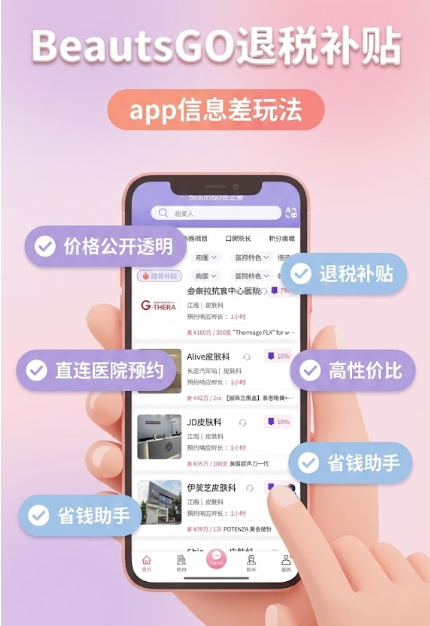
Before the official end of the tax refund policy, BeautsGO had already completed its structural adjustments, replacing “national tax refunds” with “hospital subsidies.”
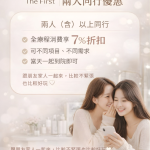
Currently, BeautsGO has identified and confirmed nearly 30 Korean dermatology and anti-aging institutions that offer discounts of 5% to 10% or equivalent benefits on the following high-demand treatments:
Ultrasound-based anti-aging treatments, Thermage, regenerative injections (such as PDRN and youth-enhancing injections), laser skin care, and other low-cost treatments with high repeat purchase rates.
These discounts are not short-term promotions but result from long-term cooperative relationships established with hospitals, based on the platform’s ability to attract customers. The subsidy is directly reflected in the settlement process, reducing hidden fees and ensuring price transparency.
Under this model, even without official tax refunds, users’ actual expenses remain close to—or even equal to—those during the refund period.
IV. In comparison, why is medical beauty treatment in South Korea still more cost-effective?
Under the BeautsGO platform’s subsidy system, the advantages of medical beauty treatments in South Korea extend beyond just prices.
Firstly, the technology and expertise offered at the same price level are higher. South Korean doctors specialize in a particular field, resulting in more stable procedures and consistent aesthetic outcomes.
Secondly, the prices and details of the services are more transparent. The types of injections used, the number of treatments, energy levels, and whether taxes and administration fees are included are all clearly stated, reducing the potential for additional costs.
Finally, the risk associated with these treatments is lower. Since doctors’ personal brands are closely linked to their hospitals, the incidence of disputes is reduced, enhancing overall safety.
Overall, even without considering tax refunds, medical beauty treatments in South Korea offer clear advantages in terms of cost-effectiveness, stability, and reliability.
V. Medical beauty in China is not merely a “traffic dividend” but a true test of capability.
The end of tax refunds for medical beauty treatments in South Korea will not automatically lead to a return of customers to the domestic market.
For China’s medical beauty industry, this is more of a test of capability: whether prices can be made transparent, doctors can become more specialized, marketing practices can be streamlined, and post-treatment responsibilities can be clearly defined.
Until these issues are fully resolved, consumers with a clear understanding and ability to compare options will still prefer to seek medical beauty treatments in South Korea.
VI. Conclusion: The end of the tax rebate policy for South Korean medical beauty treatments signifies the end of a policy-based advantage, not the loss of its cost-effectiveness.
The termination of this tax rebate policy does not mean that South Korean medical beauty treatments have lost their appeal; rather, it marks the end of an era of information asymmetry.
What truly remains is a model of South Korean medical beauty treatments that relies on platform filtering, transparent pricing, and stable partnerships with hospitals.
Although the tax rebate policy has ended, cost-effectiveness stil
l exists. The key lies not in policies but in choosing the right channels.